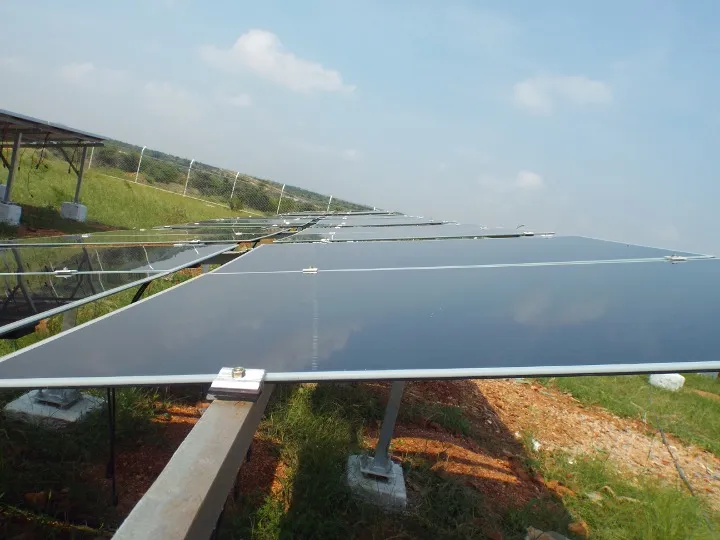
Solar PV Outdoor Reliability Testbed
IISc Challakere · 22 kW · 116 modules · Live Dashboard ↗
Background and Significance
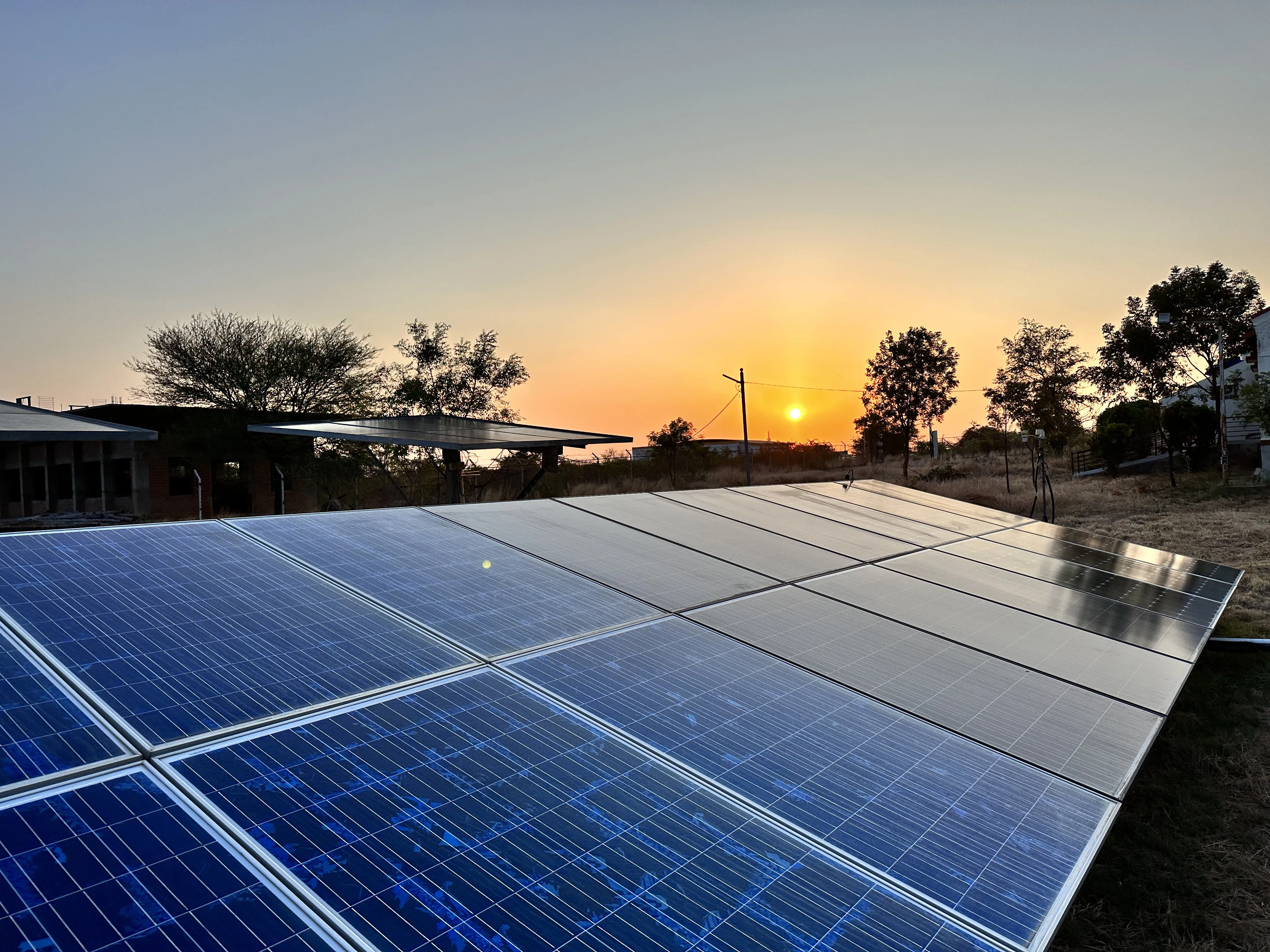
The Solar PV Outdoor Reliability Testbed at IISc's Challakere campus was established in 2010 as one of India's first large-scale research facilities dedicated to understanding the real-world performance and reliability of solar PV technologies. Since then, it has continuously operated, providing over 10 years of long-term reliability data that is now being systematically analysed to correlate PV performance with local weather parameters such as temperature fluctuations, humidity, dust load, UV exposure, and wind stress.
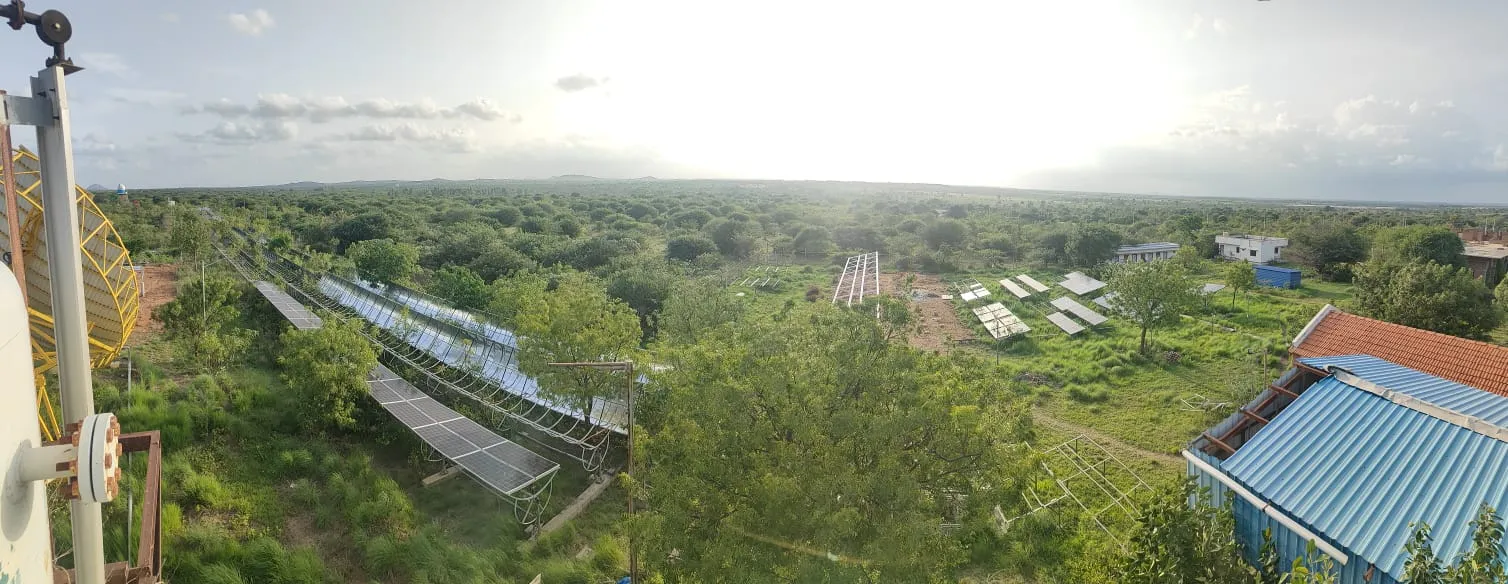
This extensive dataset makes the Challakere testbed a nationally unique infrastructure, enabling the identification of degradation pathways, failure modes, and reliability statistics for multiple PV technologies under Indian conditions. The facility supports fundamental materials research and industry-driven reliability needs, positioning it as a critical test platform for India's solar future.
Fundamental Research Contributions
The testbed is an open-air laboratory where field-scale observations feed directly back into molecular and device-level research:
- Degradation science: linking polymer encapsulant ageing, electrode corrosion, and semiconductor defect formation to outdoor stressors
- Charge transport and interfaces: comparing laboratory mobility and recombination studies with field-degraded modules to understand long-term changes in carrier dynamics
- Encapsulation validation: testing ultra-low-permeability encapsulants and CRDS-based permeability measurements developed at IISc under real deployment
- Reliability physics: building predictive models of performance loss mechanisms based on more than 10 years of field data
AI and Future Energy Prediction
One of the most exciting new directions is using artificial intelligence (AI) and machine learning to analyse the massive datasets accumulated from the testbed. By connecting weather parameters with PV performance degradation, we are developing predictive algorithms for future energy yield and reliability forecasting.
These models will improve deployment planning and enable smart grid integration and policy frameworks for India's renewable future.
Infrastructure and Capabilities
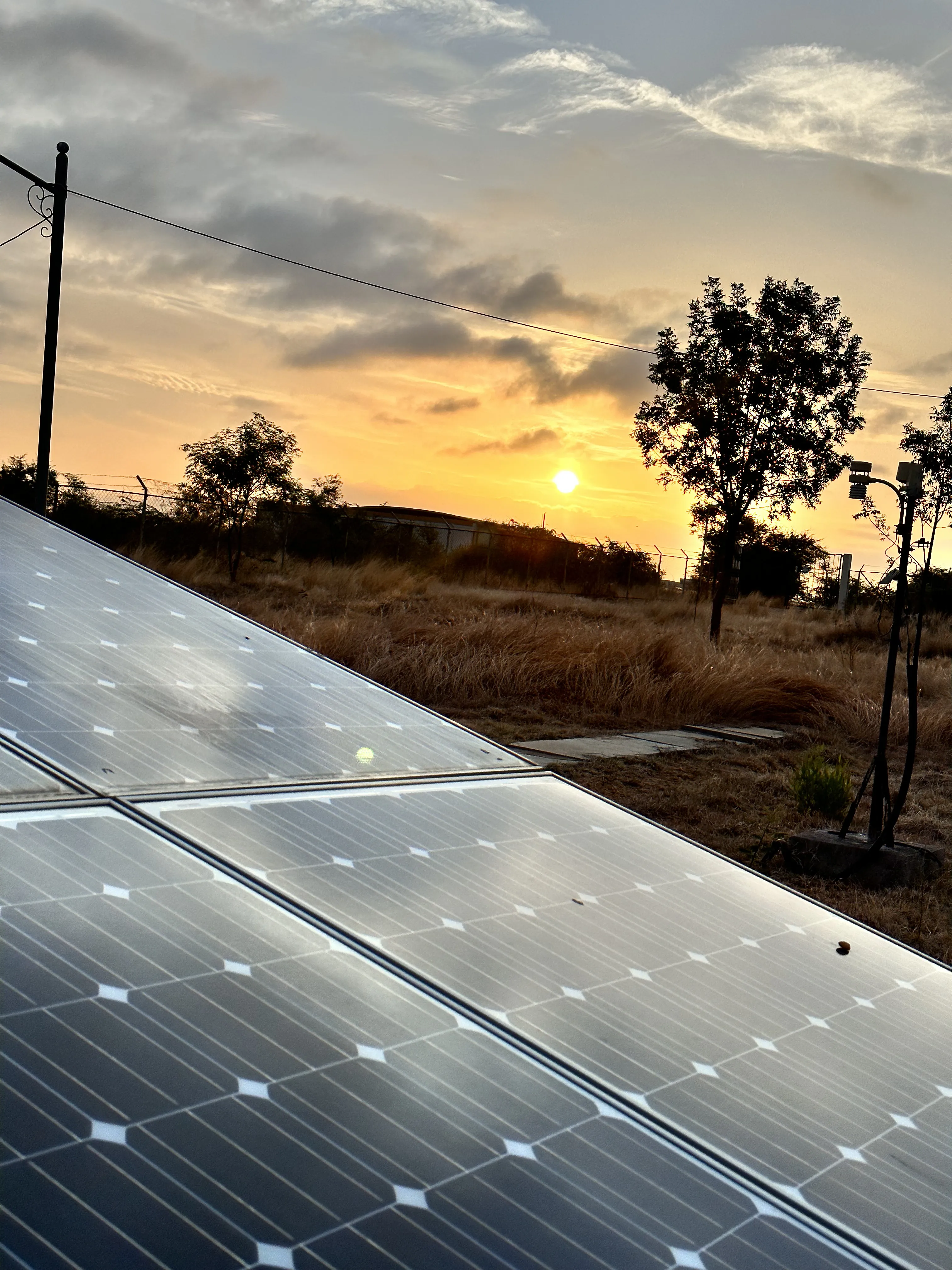
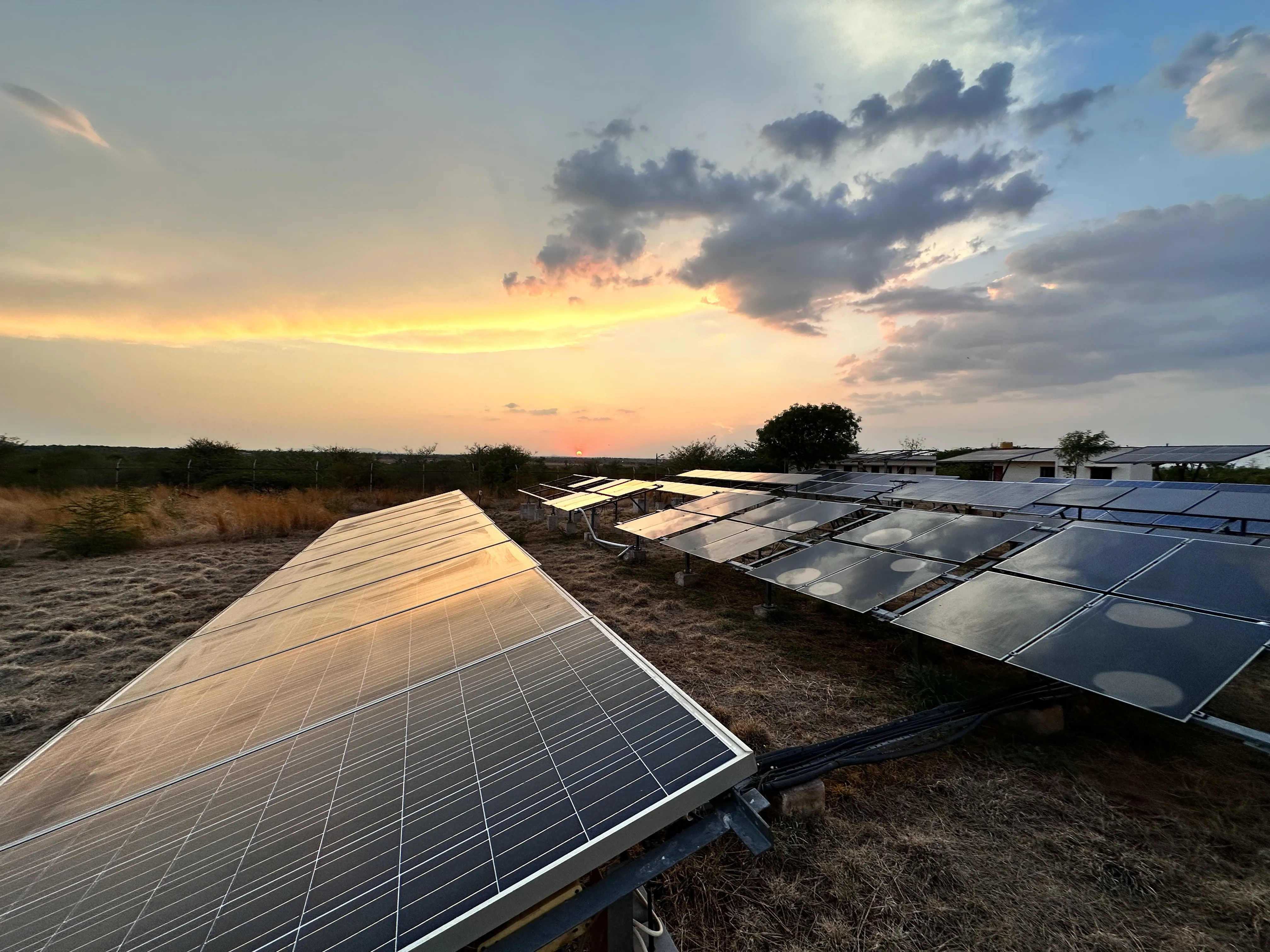
- Capacity: 22 kW system with 116 PV panels (monocrystalline, polycrystalline, thin-film, CdTe, CiGS, GaAs), being expanded to 150 kW / 400 panels
- Mounting: fixed, seasonal tilt, single-axis, and dual-axis trackers
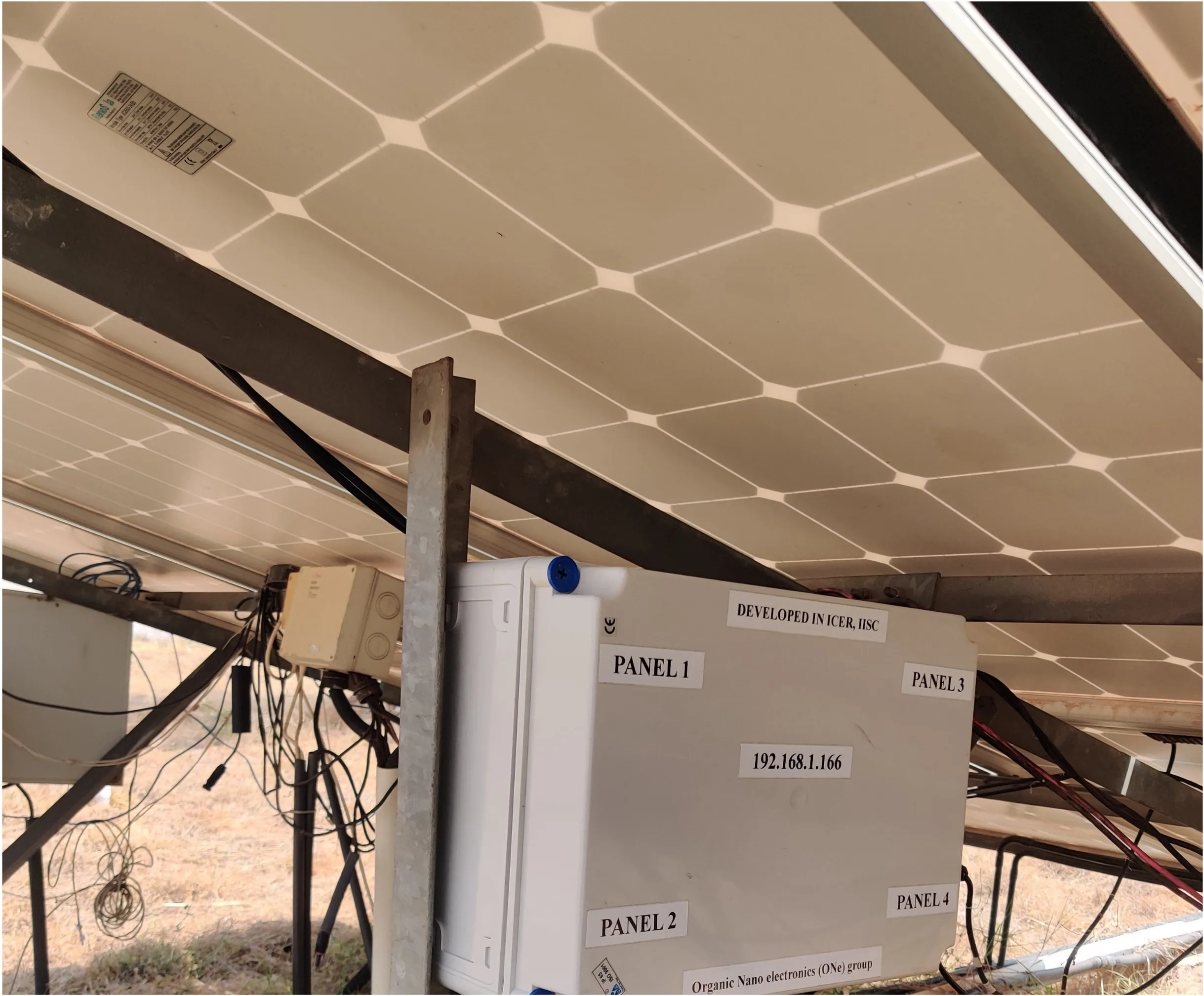
- Powertrain: hybrid inverter with battery bank for off-grid and microgrid operation, microinverters, unique in-house developed real-time IV tracers
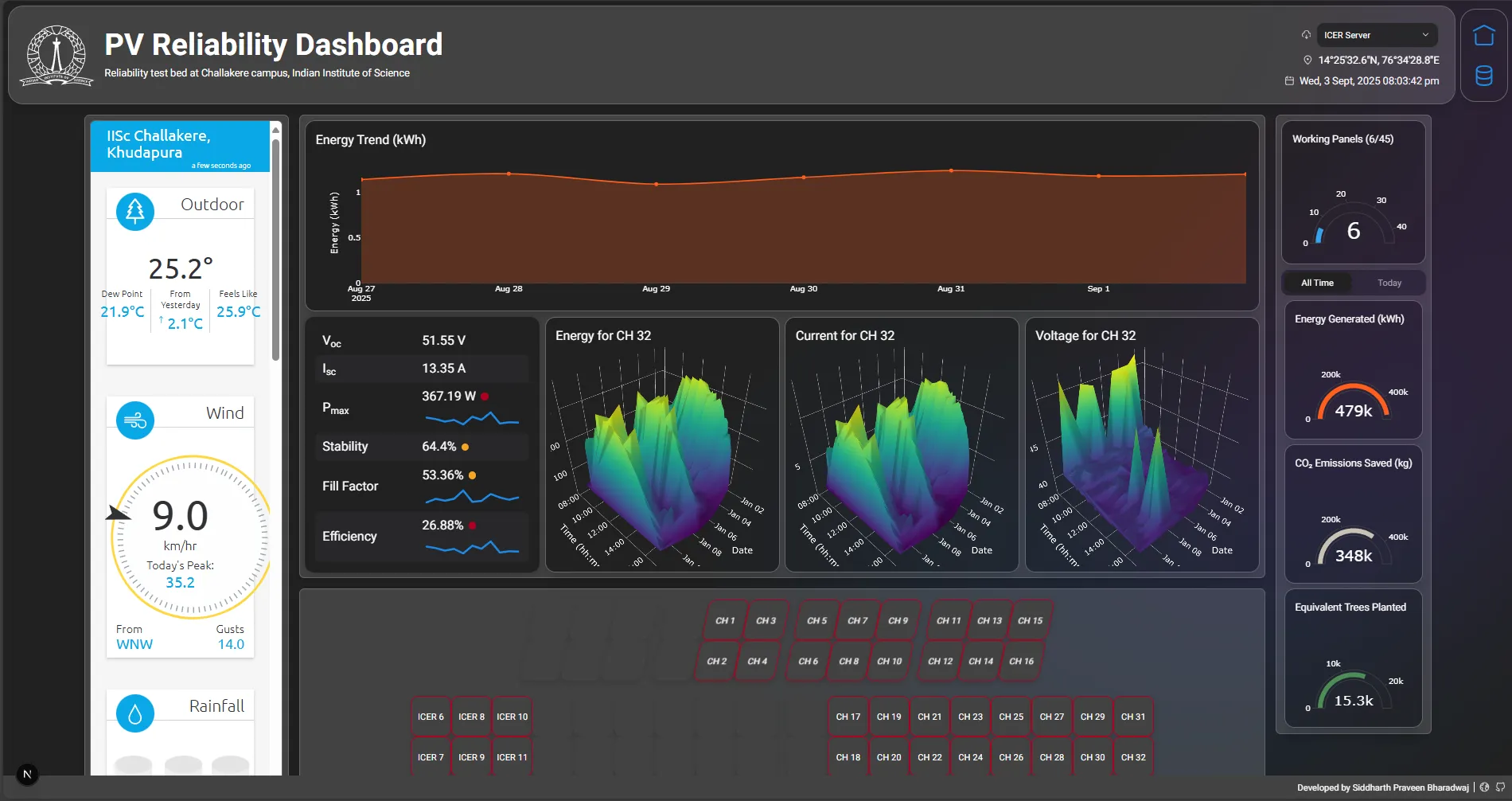
- Instrumentation: high-resolution monitoring of irradiance, humidity, wind, temperature, and UV radiation, linked to a live data dashboard
- Stress protocols: thermal cycling, damp heat, UV exposure, and mechanical fatigue testing
Expansion with IIT Bombay (2025)
In 2025, IIT Bombay formally joined this initiative, expanding the scope and ambition of the testbed.
- IISc strengths: materials science, packaging, and degradation physics
- IITB strengths: PV systems engineering and field reliability testing
This collaboration is building a national platform for PV reliability research. IISc and IITB are setting the foundation for industry-academia-government cooperation, ensuring that India's PV deployment is efficient and durable.
Industry and Policy Relevance
For the industry, the testbed provides:
- Independent validation: third-party long-term performance datasets under Indian conditions
- Certification support: reliability benchmarks for warranties and standards
- Accelerated testing: field evaluation of new module designs, inverters, coatings, and encapsulants
- Policy guidance: data-driven inputs for government frameworks on solar energy deployment
It provides evidence-based insights into solar reliability and bankability for policymakers and stakeholders, helping secure India's energy future.
Impact
The Challakere testbed is not just a facility but a national asset.
- Years of operation: 15 years of continuous testing
- Long-term dataset: over 10 years of field data
- Predictive modelling: AI-driven energy yield and reliability forecasting
- National partnership: new IISc-IITB collaboration
It represents India's most comprehensive effort to ensure that solar power is not only clean and affordable, but also reliable, durable, and future-ready.