Organic Nano electronics (ONe) Group
Our group advances the science and engineering of organic electronics and functional materials, guided by the principle that fundamental molecular-scale understanding drives real-world technologies. We design molecules, study charge transport and exciton dynamics, and build devices that address energy, environment, and health challenges.
Research areas

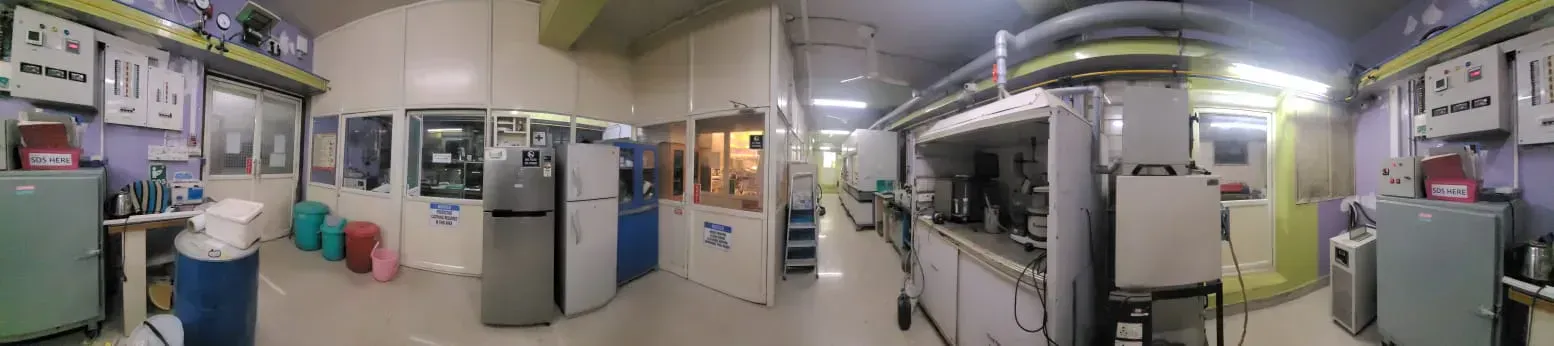
Molecular & Electronic Materials
At the heart of this work is the rational design of bandgap-engineered molecules and conjugated polymers. The group studies electronic structure tuning in donor-acceptor frameworks and hybrid composites, charge transport dynamics including exciton diffusion, polaron motion, and trap-limited recombination, semiconductor-electrode interface engineering, and how nanoscale ordering correlates with macroscopic electronic behaviour.

Sensors & One Health
The group builds sensors that use molecularly engineered receptors and nanostructures to translate recognition events into measurable charge or optical signals. Aligned with the One Health paradigm, these sensors target VOCs, toxic ions such as arsenic, lead, mercury, cadmium, and chromium, biomarkers and pathogens, and emerging contaminants including pesticides, antibiotics, PFAS, and microplastics, with an emphasis on real-time, IoT-enabled monitoring of water, food, and air quality.
Energy & Device Engineering
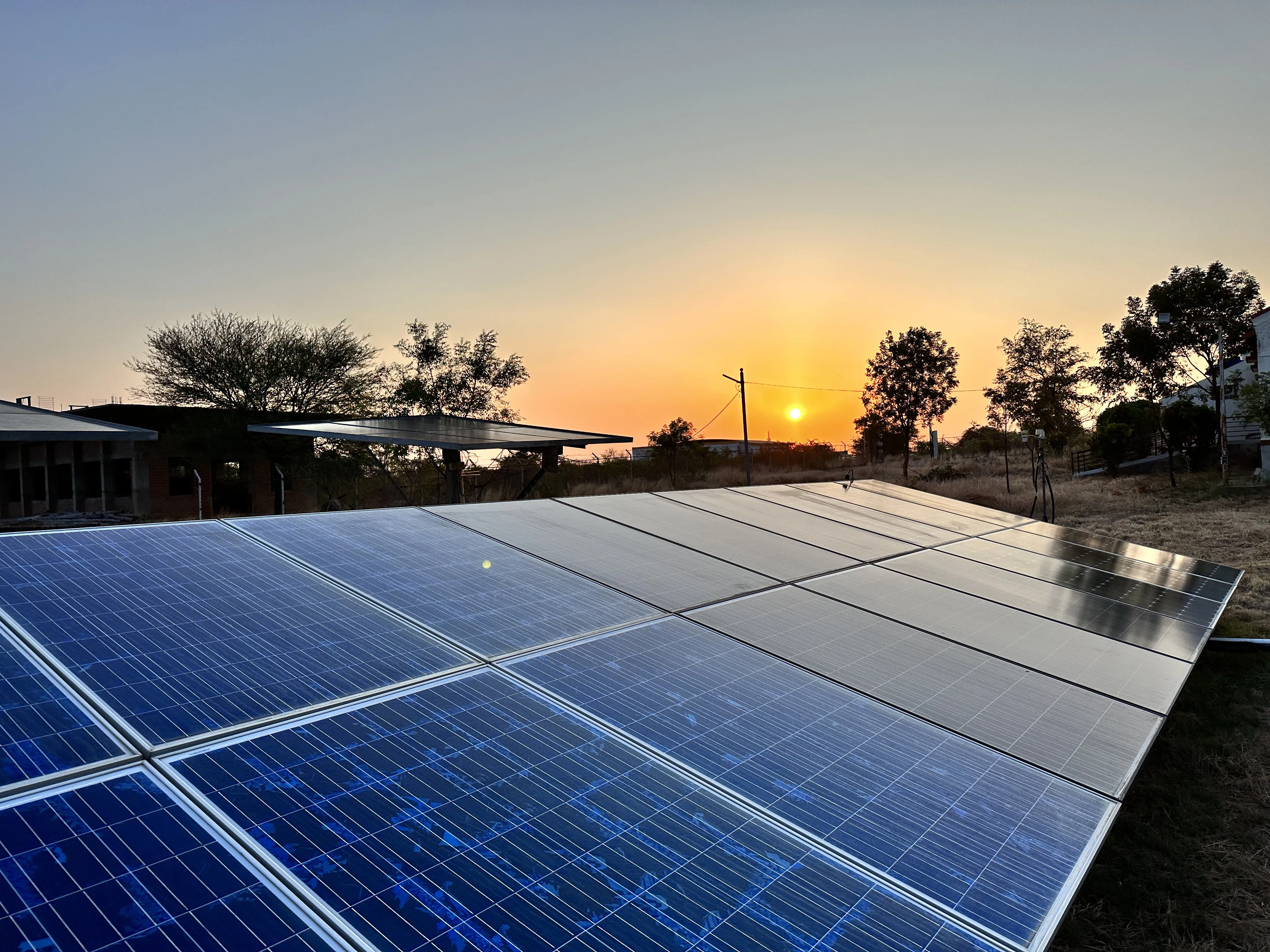
This theme covers nanostructured and hybrid device architectures - electrospinning, ternary blends, and non-lithographic nanostructuring for solar cells and field-effect transistors - together with packaging and stability work: ultra-low-permeability encapsulants, CRDS-based permeability testing, and failure analysis. This is the work that has demonstrated organic photovoltaics operating for more than 80,000 hours while retaining over 80% performance.
Environmental Materials
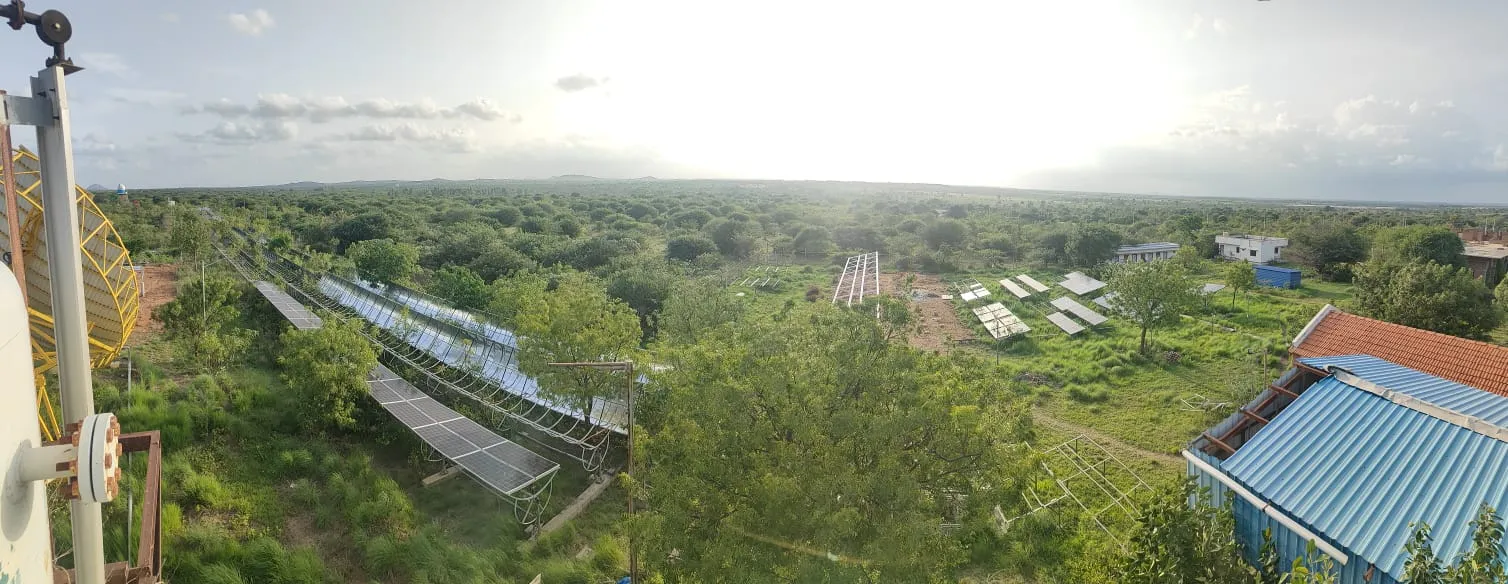
Sensing platforms are coupled with remediation technologies to close the detection-mitigation loop: fluorescence-tagged probes and biomimetic nanomaterials for microplastic and nanoplastic detection and capture, MOF-biochar hybrids and nanofibers for heavy-metal and PFAS adsorption, and hybrid nanostructures for the simultaneous sensing and breakdown of pesticides and antibiotics.
Research output
Latest updates
- Dr. Simranjeet Singh, Awarded - Young Scientist Award from Amity University
- IISc researchers launch concentrator capable of producing oxygen at more than 93% purity
- Type of cleaning-infection control-infection prevention-activity at National Institute of Standards and Technology (NIST)
- Efficacy of Ultraviolet-C Devices for the Disinfection of Personal Protective Equipment Fabrics and N95 Respirators at NIST
- Karnataka expresses interest in home-grown oxygen concentrator
- IISc solutions to aid tackle oxygen shortage
From the lab to deployment
Four technologies developed in the group have reached deployment: IoT-enabled water sensors, large-area perovskite photovoltaic modules, air purification systems, and oxygen concentrators used during the COVID-19 pandemic.
Impact and technology translation